A program that spent two decades teaching fourth graders about healthy eating and exercise on a shoestring budget found an unexpected path to survival—and even expansion—through a key connection made at a workshop hosted by the Daugherty Water for Food Global Institute’s joint Water, Climate and Health Program.
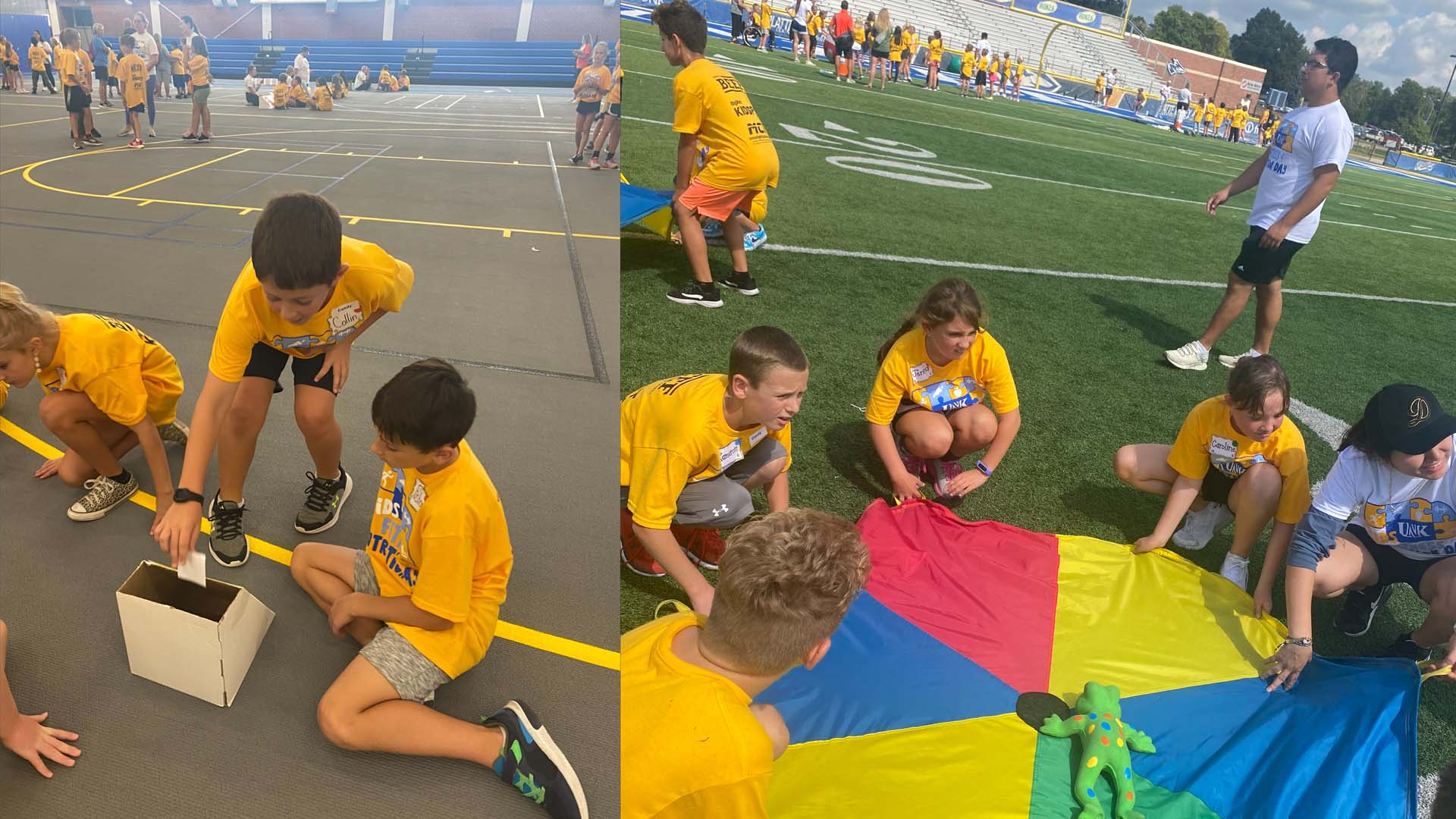
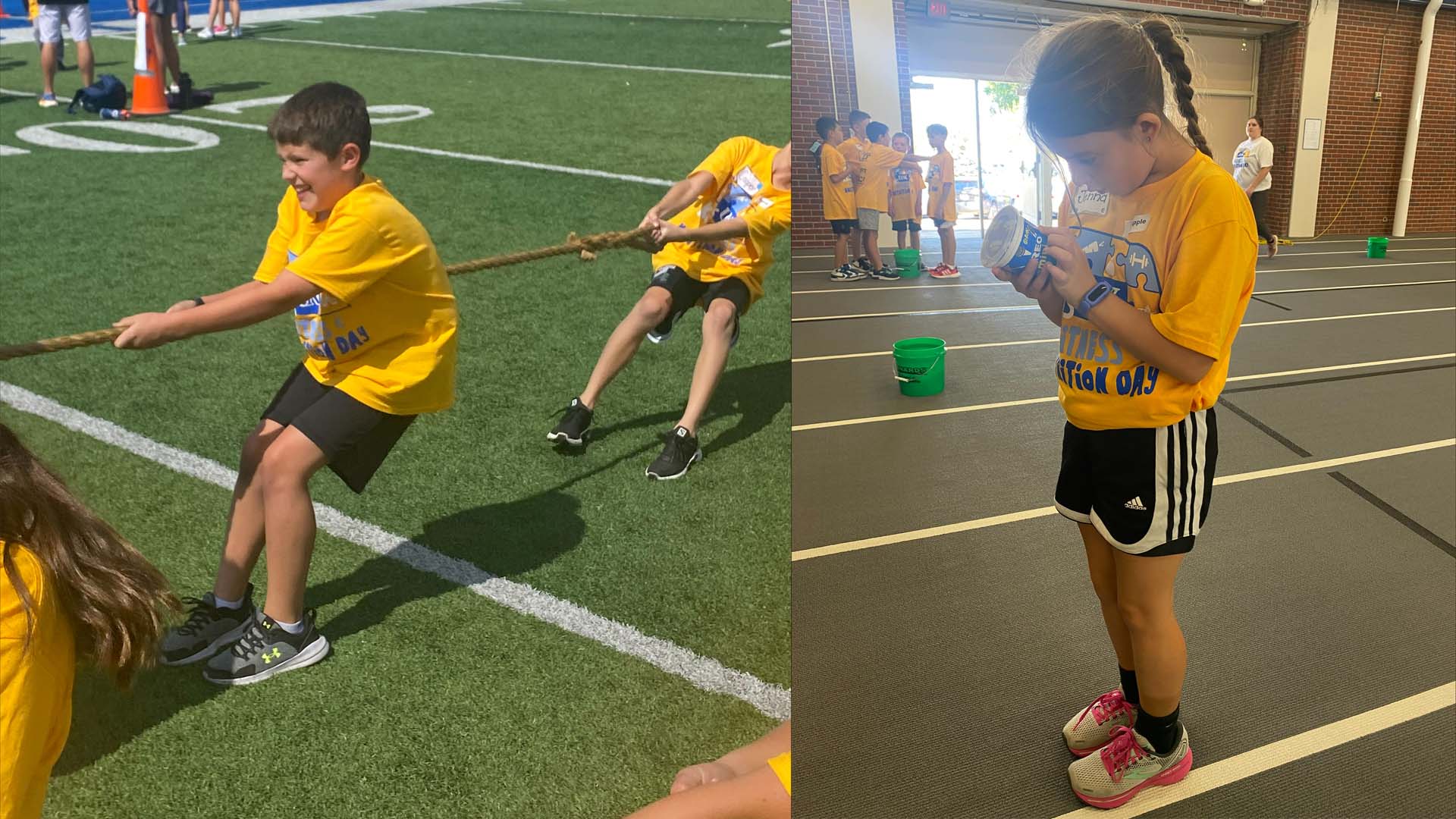
For more than 20 years, Nebraska Kids Fitness and Nutrition Day has brought fourth graders from across central and western Nebraska to university campuses or shared community spaces for a full day of hands-on nutrition lessons and fun physical activity stations, all on a budget of roughly $15,000 and split across as many as seven locations. Coordinators borrowed equipment and solicited in-kind donations to make it work.
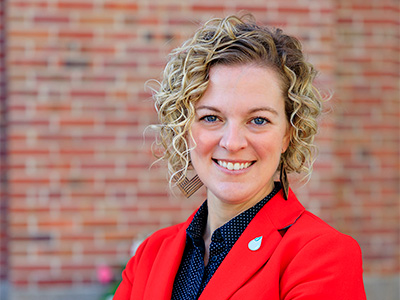
"We've been begging and borrowing for 20 years," said Kaiti George, RD, LMNT, who co-founded the program in 2004 at the University of Nebraska at Kearney (UNK), where she leads the pre-dietetics program and holds a joint appointment with the University of Nebraska Medical Center (UNMC).
That precarious existence came to a head last fall when the Nebraska Beef Council, the program's primary funder for nearly two decades, informed George and her colleagues that their funding could no longer continue and the future of the program became uncertain.
Amid this uncertainty, George attended a workshop in Omaha that would change everything.
Bringing the right people to the table
The Water, Ag and Nutrition Workshop was hosted by the Water, Climate and Health Program, a joint initiative of the Daugherty Water for Food Global Institute (DWFI), the University of Nebraska Medical Center (UNMC) College of Public Health (COPH), and the Institute of Agriculture and Natural Resources (IANR) at the University of Nebraska–Lincoln (UNL). The workshop convened researchers, public health officials, nonprofit leaders and community practitioners to explore the links between agriculture, water, nutrition and health. A deliberately broad gathering, the workshop was designed to surface connections that narrower, more academic settings might miss and to shape a collaborative agenda for research, practice and investment.
Julie Petersen, Ph.D., MPH, an assistant professor at the UNMC COPH and affiliate faculty member with the Water, Climate and Health Program, whose research focuses on nutrition in women and children, helped organize a panel on community nutrition spanning birth through young adulthood. She wanted voices from across the state: WIC coordinators from Lincoln, home daycare educators from western Nebraska and urban gardening advocates from North Omaha. When she began looking for someone to speak to the needs of elementary-age children, she was connected with George, despite their paths never having crossed prior.
Near the end of George's presentation, an audience member asked about the long-term sustainability of Nebraska Kids Fitness and Nutrition Day. George was candid: after 20 years, the funding was going away, and the program's future was unclear.
That honest moment, shared with the right audience, proved transformative.
A sidebar that sparked a solution
During a break following the panel, Sydney Stein, DVM, MPH, Nebraska's state epidemiologist, pulled George aside. Stein had come to the event because Petersen serves as the academic advisor for a graduate assistant working with Stein at the Nebraska Department of Health and Human Services (DHHS) Division of Public Health. Petersen had suggested the workshop as a good opportunity to meet partners working on nutrition and community health.
Stein had recently stepped into her role with a direct charge from the governor to address obesity across the state. She had been holding stakeholder forums, building a 10-year plan and actively seeking partners with existing, proven programs. When she heard George describe a two-decade-old initiative that was successfully reaching thousands of rural Nebraska fourth graders, she was immediately interested.
"It definitely seemed like an impactful program, and one that Nebraska would really miss out on if the full funding went away," Stein said.
At that moment, Stein didn't yet know how she might be able to help. But that sidebar conversation started a chain of events that, within months, would transform a program that had survived on borrowed equipment into one with five years of substantial, dedicated funding.
Major funding secured for 2025 and beyond
The mechanism was the Rural Health Transformation Program (RHTP), a federal initiative through the Centers for Medicare and Medicaid Services (CMS) tied to the One Big Beautiful Bill Act passed the previous summer. Nebraska was eligible to compete for a portion of the $50 billion award, and state agencies had a compressed timeline of just weeks to identify programs, gather stakeholder input and submit an application.
Stein, drawing on the relationships she had cultivated through the DHHS obesity initiative and through events like the DWFI workshop, included Nebraska Kids Fitness and Nutrition Day in Nebraska's proposal. When the state was ultimately awarded $218.5 million per year, exceeding what had been written into the original grant, Stein was able to return to budget negotiations and secure additional community-based programming funding.
The result: Nebraska Kids Fitness and Nutrition Day received an approved allocation of $500,000 per year for the next five years.
What the funding makes possible
The new resources will allow the program to expand in size and scope, reaching more kids across Nebraska. The event's curriculum will be professionally updated, branded and packaged so that schools across the state can use it. Physical activity equipment that has been in service for two decades or borrowed will be replaced and expanded. Educators will receive formal training on how to teach the curriculum.
In years two and three of the funding cycle, the program plans to add five additional site locations across the state, extending the event's reach from its central and western Nebraska base into communities that have not previously had access. Partners could include other colleges and universities throughout the state.
Beyond the day itself, the funding may eventually support after-school and community-based programming, with subawards potentially going to YMCAs and other organizations to offer similar nutrition and fitness education on an ongoing basis to Nebraska’s youth.
The program's first year of the new funding will focus on sustaining existing operations and laying the groundwork for expansion. Fall events are already being planned for September and October.
"These events usually take place in the fall," George said, "We are currently in year one and are actively planning events that will take place in September and October of this year."
The value of convening
For Petersen, the outcome illustrates exactly what cross-sector, in-person gatherings like the Water, Ag and Nutrition Workshop are designed to produce and why institutions like DWFI are uniquely positioned to host them.
"There are a lot of things that happen at UNMC, and they often tend to be more focused on just getting together academics," Petersen said. "You lose a key element of how research is going to be translated and how it could actually impact local communities. Having nonprofits involved, local and state health departments, all of that just makes it so much richer."
Petersen pointed to the workshop's specific design as a factor: panels that brought together practitioners working on adjacent problems, paired with unstructured time for attendees to move around and connect, created the conditions for the kind of informal conversation that led to the funding breakthrough. It's harder to replicate, she said, in a virtual format with breakout rooms.
Stein agreed. Since stepping into this position in March 2025, she has made a priority of attending in-person events whenever possible, precisely because those side conversations have become a through line connecting her work on the governor's obesity initiative, DHHS chronic disease programs, the RHTP proposal and ongoing funding applications.
"When we learn of funding opportunities that have a really short turnaround time," Stein said, "having these relationships and already having made those collaborations before makes it much easier to put together a thoughtful application that is going to bring in funding for a purpose that the state and the community wants and needs."
20 years in the making
For George, who has given her career to a program built on goodwill and borrowed equipment, the shift is almost difficult to absorb. But the thing she keeps coming back to is not the money itself, it is what the money makes possible for the people who have been carrying this work.
"We have the right people on this team to dream big," she said.
She highlighted a physical education teacher in Kearney who has experienced the program at every stage: first as a fourth-grade participant, then as a college volunteer and now as a teacher who brings his own students to the event each year.
"If that's not full circle," George said, "I don't know what is."
For DWFI's Water, Climate and Health Program, the story of Nebraska Kids Fitness and Nutrition Day is a concrete demonstration of what happens when researchers, practitioners and policymakers are brought together not just to present but to listen, connect and act.
The workshop did not fund the program. It did something more lasting: it put the right people in the same room at the right time, and let the conversation do its work.
Nebraska Kids Fitness and Nutrition Day was developed in 2004 by Kaiti George and Kate Heelan of the University of Nebraska at Kearney. Organizations or institutions interested in hosting future events may contact George at georgekd@unk.edu.