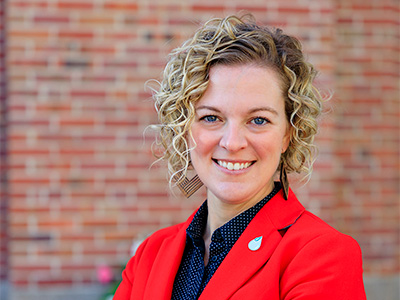
A companion post to this week's Water for Food Podcast episode with Dan Snow, director of the Water Sciences Laboratory at the University of Nebraska–Lincoln.
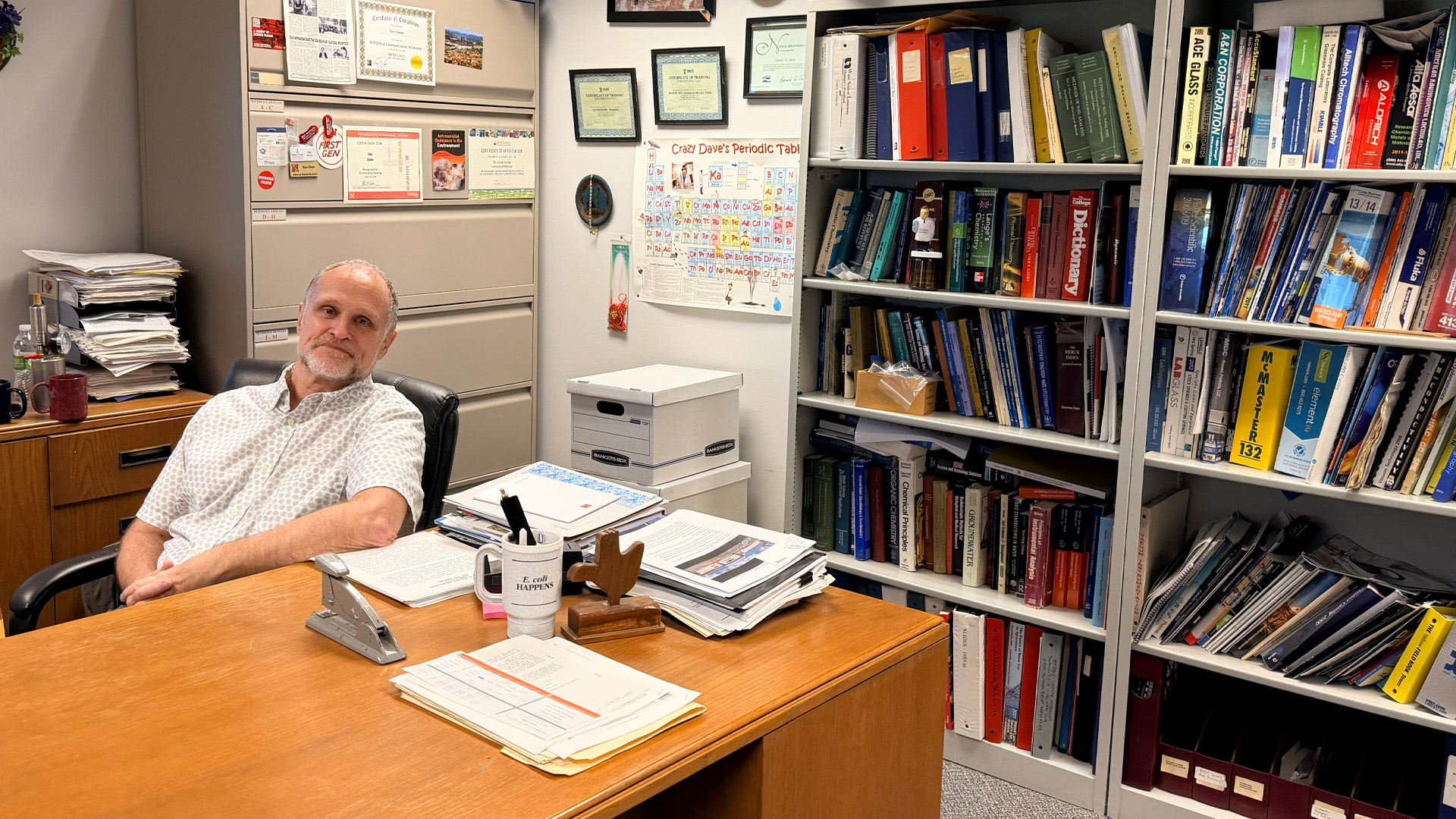
When most people think about a life dedicated to environmental science, they might picture high-tech laboratories or global field expeditions. For Dan Snow, director of the Water Sciences Laboratory at the University of Nebraska–Lincoln—part of the Nebraska Water Center and Daugherty Water for Food Global Institute (DWFI)—it all began on a farm in southwest Iowa with a bucket and a contaminated well.
As Dan prepares to step down from his long-standing leadership role and upcoming transition into retirement, he leaves behind an enduring legacy in environmental mass spectrometry, water quality research and global scientific exchange. In a recent episode of the Water for Food Podcast, Dan joined host and DWFI Director of Communications and Public Relations Frances Hayes to reflect on his career milestones, the evolution of water testing technology and what lies ahead for the future of water stewardship.
Making the connection: From farm well to water chemistry
Dan’s path into water science was grounded in practical experience. As a young teenager, one of his chores on the farm was cleaning out the family’s drinking water well.
After retrieving dead mice from the well’s surface, Dan made an immediate connection between groundwater quality, environmental conditions and human health. Though the well wasn't disinfected at the time, the lesson stayed with him.
Later, a high school guidance counselor suggested geology as a field that combined his outdoor interests and knack for fixing machinery. Dan went on to earn a bachelor's degree in geology from Southwest Missouri State, followed by a master's degree at Louisiana State University, where he developed a deep fascination with water chemistry. He completed his Ph.D. at the University of Nebraska under Roy Spalding, the founding director of the Water Sciences Laboratory. Dan served as the first lab manager and eventually succeeded Spalding, becoming the lab’s second director, a position he has held for over two decades.
Transforming water research through mass spectrometry
Throughout his tenure, Dan championed the use of advanced analytical tools, particularly mass spectrometry, to decode complex water quality issues.
Among the lab’s key achievements is nitrate isotope fingerprinting. By measuring the isotopic composition of nitrate, researchers can trace where nitrogen originates—whether from commercial fertilizers or organic sources like livestock manure and wastewater. Identifying contamination sources allows resource managers and farmers to implement more effective conservation strategies.
When Dan began his career nearly 40 years ago, mass spectrometers relied on bulky vacuum tube technology, generated intense heat and required manual tracking on strip chart recorders. Today, thanks to micro-circuitry and solid-state electronics, these powerful instruments fit on a benchtop, offering unprecedented sensitivity for detecting trace contaminants.
Elevating Nebraska’s science on the global stage
A passionate advocate for international collaboration, Dan’s work has taken him around the globe, including Fulbright Specialist work in Brazil and ongoing research partnerships in Kazakhstan.
During his international exchanges, Dan frequently highlights Nebraska’s proactive approach to water management. The “clearinghouse” is an example he promotes worldwide. Established in the early 1990s by Roy Spalding and Mary Exner, the Nebraska Agricultural Chemical Clearinghouse database tracks groundwater contaminants statewide and serves as an international benchmark for regional water monitoring. Sharing Nebraska's scientific framework allows other nations to learn from the state's successes and management models while building long-term research connections.
Emerging challenges: PFAS, microplastics and the future
Looking toward the future of water quality, Dan emphasizes that water quality must always be evaluated in the context of its intended use—primarily whether it will be used for human consumption and food production. Water quality depends on its use.
Emerging areas of focus for the next generation of water scientists include per- and polyfluoroalkyl substances (PFAS), also known as "forever chemicals." Although PFAS have existed since the mid-20th century, modern testing technology now enables detection at extremely low concentrations, helping researchers better assess exposure and potential health risks. Additionally, as synthetic polymers break down in the environment, understanding how microplastics and nanoplastics move through water systems affecting organisms represents another key priority.
While Dan remains confident in public municipal drinking water infrastructure regulated by the EPA, he notes that the quality of private wells and designing large-scale agricultural irrigation systems for food crops present ongoing management and treatment challenges.
What’s next
Dan’s transition into retirement will be a gradual one. Starting next year, he will serve as a part-time remote advisor to assist in training the laboratory’s incoming third director. His next chapter includes relocating to Manchester, England, while continuing scientific mentoring and international research collaborations in Kazakhstan, Brazil, India and Africa. He also looks forward to spending more time on personal hobbies, including scuba diving and riding motorcycles.
Reflecting on his career, Dan views his role not as an owner, but as a dedicated caretaker of the Water Sciences Lab, a vital institution built to serve Nebraska and the broader scientific community.
Listen to the full conversation on the Water for Food Podcast