What if the next breakthrough in agricultural research didn’t come from a lab, but from a photograph taken by a farmer?
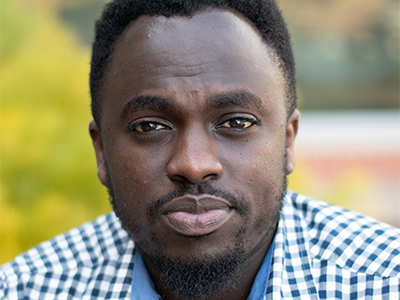
When I joined the Daugherty Water for Food Global Institute (DWFI) in 2021, I came with a clear passion to bridge the worlds of research and communication through visual storytelling. Having been born and raised in Rwanda, I’ve always been drawn to the voices and experiences of smallholder farmers, people whose daily labor sustains much of the world’s food system, yet whose stories often go unheard. My goal has been to help bring those stories to light, capturing the human side of agriculture, water and food security through powerful visuals and meaningful narratives.
Working closely with researchers at DWFI deepened my understanding of the wide range of ways the institute already works with farmers through field research, partnerships, extension efforts and collaborative projects across regions. These experiences also led me to reflect on how we can continue to strengthen those connections. What additional tools might help capture farmers’ perspectives in new ways? How can visual storytelling make research insights even more accessible and impactful?
While exploring these questions, I came across participatory photography, a creative and participatory research method that resonated strongly with both my professional background and personal mission. This approach places cameras directly in the hands of farmers, enabling them to document their own experiences and share their perspectives on issues such as irrigation practices, climate uncertainty and community-level innovation. Through their images, farmers become storytellers of their own realities, offering insights that might otherwise remain unseen or unheard.
Several research projects around the world have already demonstrated how powerful this approach can be. In Papua New Guinea, researchers used participatory photography to understand how smallholder farmers perceive environmental change and adapt their livelihoods, revealing the close ties between natural resources, education and community well-being (Hazenbosch et al., 2022). In India’s Rajasthan region, villagers employed the method to document groundwater challenges and management conflicts, bridging local experiences with scientific and policy discussions (Chew et al., 2021). Similarly, in Rwanda, Oxfam’s “SMART Photovoice” initiative empowered rural women farmers to photograph and explain the barriers they face in agriculture—allowing them to share their realities directly with agricultural researchers and government officials (Gervais & Rivard, 2013). Each of these examples shows that when communities are trusted to represent their own experiences visually, research becomes more relevant, inclusive and grounded in lived reality. While participatory photography is not appropriate for every research context, these examples highlight its potential as a complementary approach, especially in projects where understanding lived experiences and local perspectives is essential.
What stood out to me about this method was how it redefines the concept of communication. It is not just a way to share research findings but a meaningful part of the research itself. Participatory photography encourages shared learning and the creation and dissemination of local knowledge. It replaces the traditional one-way flow of information from researchers to farmers with a more balanced exchange, where everyone contributes ideas, experiences and understanding.
As I continue my journey at the intersection of multimedia, research and community impact, I am excited to explore how participatory photography can complement and strengthen existing DWFI research and engagement efforts. This method has also shown me that my passion goes beyond telling the stories of farmers; I want to help create spaces where farmers can tell their stories on their own terms, from their own lens. Communication is not just something that happens after research is complete, but an essential integrated process that supports collaboration and understanding from the very beginning.
See some my work at DWFI: https://flic.kr/s/aHBqjC3fn1