
By: Douglas Merrey, Global Fellow, Daugherty Water for Food Global Institute
This blog addresses a long-standing myth that investments in large-scale water projects are an effective route to achieving economic growth and prosperity in low-income countries. In reality, these projects absorb a large percentage of available development funds, diverting funds from investments that provide broader and more rapid benefits to people.
For decades, politicians and development institutions promoted building large-scale dams and irrigation systems as the most effective route to achieving economic growth and food and water security. The World Commission on Dams (WCD, 2020) raised numerous concerns about such investments. But they have continued: international agencies and governments continue to support the construction of large-scale dams. Is this a wise use of scarce financing?
Niger is one of the poorest and least food-secure countries in the world. A review of literature on irrigation and water management in Niger revealed that the government, many donors, and even researchers were counting on the completion of the dam to enable Niger to achieve food and water security (Merrey 2025).
First proposed in the 1970s, the African Development Bank and others began financing the planning of dam construction in 1998. It is revealing that the name of the project was “The Kandadji Ecosystems Regeneration and Niger Valley Development Program.” There is no mention of a dam in the title, perhaps because this was when the WCD report was published. The dam was to generate 629 GWH of electricity, irrigate 45,000 hectares of land, and provide clean water to Niamey. Using financing from multiple sources, construction began in 2011. It was expected to be completed by 2016. Progress was slow; the first contractor was fired for incompetence, and a second contractor was hired. The August 2023 coup led to the suspension of the funding and construction. The dam was still only about 30% completed.
The estimated cost in 2007 was $670 million. This continuously escalated, reaching $1 billion by 2020 and an estimated $1.3 billion now, if the dam is to be completed. The actual amounts spent are not readily available but are high. In essence, Niger and its partners committed to huge expenditures over a long time period with nothing to show for it today: no irrigation, no electricity generated, no urban water supplies. Nearly half the population remains poor and food insecure.
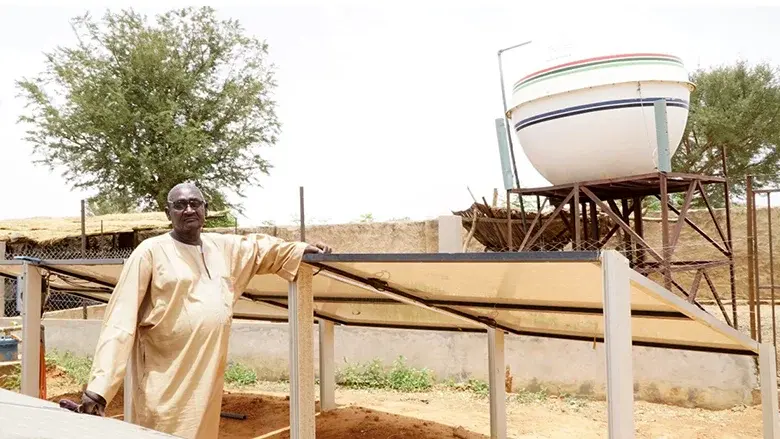
There was an alternative development path. There is strong evidence that introducing small-scale irrigation (SSI) contributes significantly to increasing food security, resilience, and household welfare. Costs are much lower, benefits accrue quickly, and there is potential to target specific populations, e.g., women. A market-driven SSI value chain responds to price signals, stimulates additional investment, and creates employment. At the time the dam construction began, the government developed SSI plans, and donors financed pilot projects demonstrating the potential. However, SSI investments remained at the pilot project level and attracted a fraction of the funds going to Kandadji (Merrey 2025).
Affordable energy was the most critical rationale for Kandadji Dam, but Niger produces oil and gas. Therefore, gas turbines would have been operational sooner and at less cost. Given the high level of sunshine in Niger, solar energy, including for irrigation, is currently the best investment.
To conclude, there is a plausible case that investing in the Kandadji Dam has significantly delayed Niger’s development. If the country had followed an alternative path of investing in SSI, gas turbines, and now solar power, Niger would have been more water, food, and energy secure today. It is not too late to divert the funds allocated to dam construction.
There is a lesson for other low-income countries: those with minimal indigenous experience and expertise should be especially wary of committing to financing mega water projects.
References
Merrey, D.J. 2025. Opportunities and research gaps for promoting irrigation and mechanization markets in Niger. Lincoln, NE: The Daugherty Water and Food Global Institute at the University of Nebraska. https://waterforfood.nebraska.edu/resources/reports-and-working-papers/opportunities-and-research-gaps-for-promoting-irrigation-and-mechanization-markets-in-niger-pdf.pdf
World Commission on Dams. Dams and development: A new framework for decision making: The report of the World Commission on Dams. London and Sterling, VA: Earthscan. https://riverresourcehub.org/wp-content/uploads/files/attached-files/world_commission_on_dams_final_report.pdf
About the series:
This blog is part of DWFI’s Smallholder Farming Mythbuster Series, which examines the narratives that too often shape how small-scale irrigation is funded, regulated, and supported. Drawing on research, field experience, and insights, the series addresses widely held assumptions about smallholder farmers, technology, cost, labor, and water use. By challenging outdated ideas and surfacing real-world data, the series aims to support smarter policy and investment, and better outcomes for the millions of farmers who depend on irrigation to secure their livelihoods and feed their communities.