

In many parts of the world, such as south Asia, the Middle East, and parts of North America and China, water availability per person is shrinking and water scarcity is a growing problem1. It’s been called a global water crisis2. Solutions are debated, and most agree that demand reduction and better management are part of the solution.
Because it’s considered a “global” crisis, the problem and its solutions have been generally applied to Sub-Saharan Africa, too. Policymakers and other specialists warn that Sub-Saharan Africa should be cautious about irrigated agriculture to avoid future water shortages and worsening drought conditions. There is particular concern about using groundwater more quickly than it can be naturally replenished and the impact of groundwater use for irrigation on water tables3.
However, this worldview mostly ignores the scientific information on groundwater resources in Sub-Saharan Africa. Most countries in Sub-Saharan Africa use less than 5% of their renewable groundwater resources, on average. Only seven countries use more than 10% of their renewable groundwater.
Sub-Saharan Africa is the least irrigated of the global regions, despite its high variability in rainfall and extreme vulnerability to drought4. Sub-Saharan Africa also already experiences food shortages, and its population is expected to double by around the year 2050. In addition, African countries export agricultural products that are increasingly in demand, such as cocoa and coffee. Further, it is expected that by 2030, most of the world’s poor (i.e., people subsisting on $1.90 a day or less) will live in Sub-Saharan Africa5.
Yet, because of the water scarcity myth, some policymakers still urge excessive caution, to the point of being a detriment to a more nuanced approach to growth and investment. For example, debates around how much solar pumps in Sub-Saharan Africa might impact water tables may even outweigh discussions on how to make pumps more accessible and affordable.
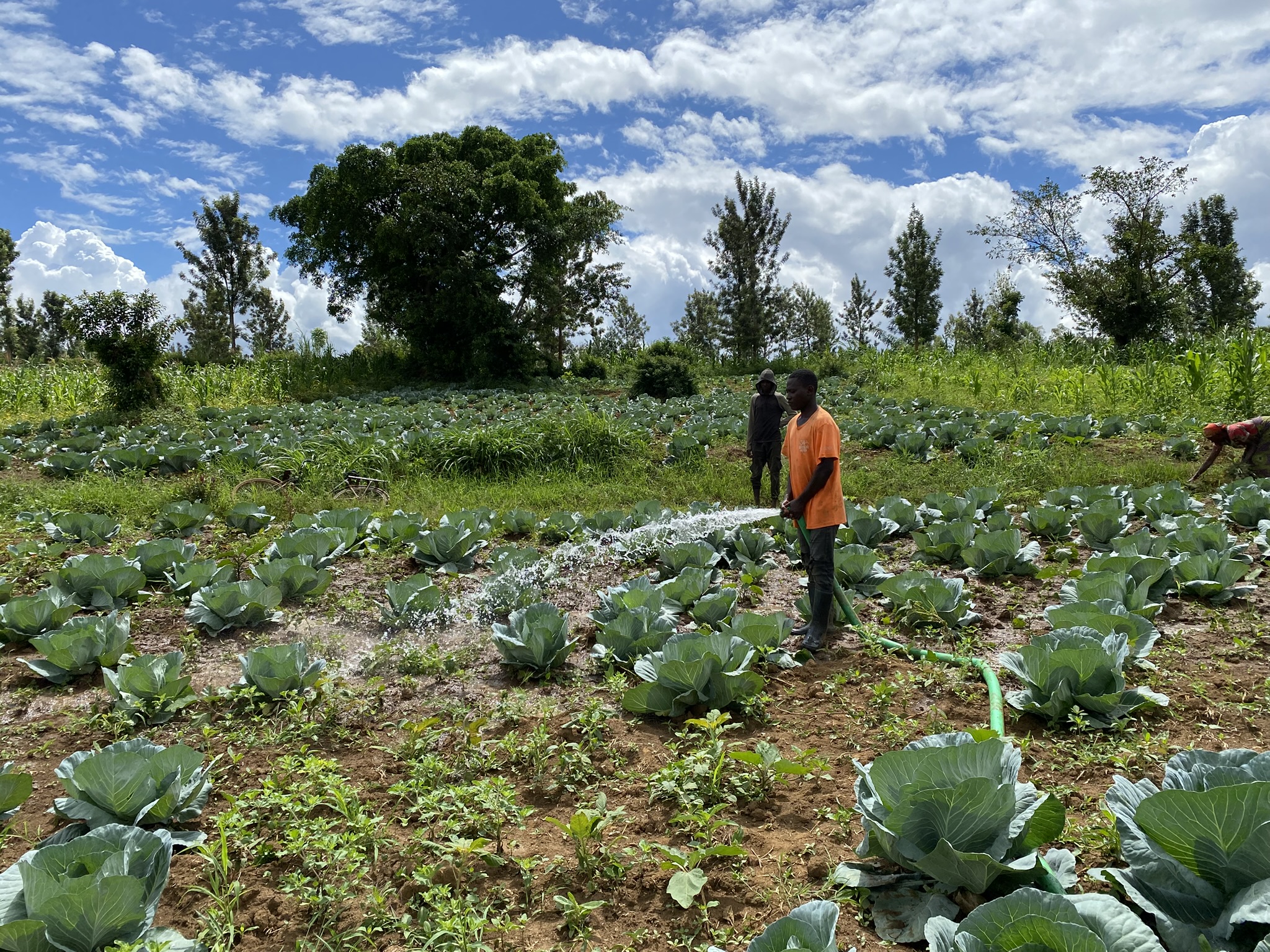
It's time to find a balance between environmental protection and economic development in Sub-Saharan Africa. This particularly applies to using water for growing food. Policies based on the myth of water scarcity constrain irrigation, limiting the continent’s ability to significantly increase food production and buffer against climate variability. The need to grow more food is recognized by the African Union in the 2025 Kampala Declaration6, which commits the continent to more irrigation and higher agricultural output as part of a vision of a food secure and independent Africa. Some argue this will harm the environment. But, ironically, discouraging water pumping for irrigation on environmental grounds may support using more acres for precarious rainfed agriculture that, in turn, displaces natural ecosystems. Without food security and an end to poverty, environmental sustainability is threatened.
According to the International Food Policy Research Institute (IFPRI), without irrigation development after 2015 the number of people in low- and middle-income countries at risk of hunger would be about 22 million more in 2030, and 44 million more in 2050, compared to an alternative in which irrigation development took place7. If there is a risk to developing water resources in Africa, there is a larger and more profound risk of deepening poverty, economic stagnation, and unemployment if this development does not occur.
About the series:
This blog is part of DWFI’s Challenging the misconceptions of smallholder irrigation series, which examines the narratives that too often shape how small-scale irrigation is funded, regulated, and supported. Drawing on research, field experience, and insights, the series addresses widely held assumptions about smallholder farmers, technology, cost, labor, and water use. By challenging outdated ideas and surfacing real-world data, the series aims to support smarter policy and investment, and better outcomes for the millions of farmers who depend on irrigation to secure their livelihoods and feed their communities.
Footnotes:
- Scarcity here means physical water scarcity, or absolute lack of water. Economic water scarcity, on the other hand, means that water is scarce because the infrastructure to store, transport, and clean it is lacking.
- E.g. Famiglietti, J.S. (2014) The global groundwater crisis. Nature Clim Change 4: 945–948
- E.g. Wada, Y., van Beek, L.P.H., van Kempen, C.M., Reckman, J.W.T.M., Vasak, S. and Bierkens, M.F.P. (2010) Global depletion of groundwater resources. Geophys Res Lett 37: L20402
- E.g. Cobbing, J.E. and Hiller, B. (2019) Waking a sleeping giant: realizing the potential of groundwater in Sub-Saharan Africa. World Dev 122: 597– 613
- See World Bank data: https://blogs.worldbank.org/en/opendata/number-poor-people-continues-rise-sub-saharan-africa-despite-slow-decline-poverty-rate
- https://au.int/en/pressreleases/20250113/african-union-adopts-ten-year-strategy-and-action-plan-transform-africas-agri
- E.g. Hua, X., Perez, N., Anderson, W., Ringler, C. and You, L. (2018) Can Sub-Saharan Africa feed itself? The role of irrigation development in the region’s drylands for food security, Water International, 43:6: 796-814.